I've always been passionate about programming, yet I'm nowhere close to professional in any sense. From a very young age, motivated by different things year by year, I've been sure in one thing - writing code is no different than playing on a piano, writing a book or painting a landscape. Sure, from one point of view, we, as programmers, just write words in the right order for a living. On the other hand, we hold the ability to create anything we can imagine, fueled by years of theory and studies. The ability itself, to randomly sit and create complex system you imagined last night, without any help - isn't it fascinating, friend? The fact itself, that our brain's neurons can connect together so much of diverse information, into one, logical thread, is truly a gift.
One another thing is, every time we create - it is unique, in one way or another. The way you wrote your program, the way you designed that interface. Each your move has quite high chances of being unique. This assumption of uniqueness collapses down to zero once you start implementing modern AI in your workflow and daily life, and there are no exceptions. Designers no longer design, programming no longer write code, etc. - they all reuse.
And if writing code once felt like playing music, today it sometimes feels like pressing “generate” and hoping the melody still sounds like ours.
Nevertheless, romanticization of thing we do, or interact with, makes our life easier, lighter. And sometimes, by doing so, we are trying to hide the truth from ourselves.
People get attached to their favorite languages, frameworks, libraries, but it does not change the fact that there is a different screwdriver for each type of a screw - the same goes for your set of tools, and perhaps, Artificial Intelligence too - it is a solid all-in-one screwdriver, which has become a very important tool in our daily lives. In 2026, everyone has access to it, and more or less, is using it on a daily basis:
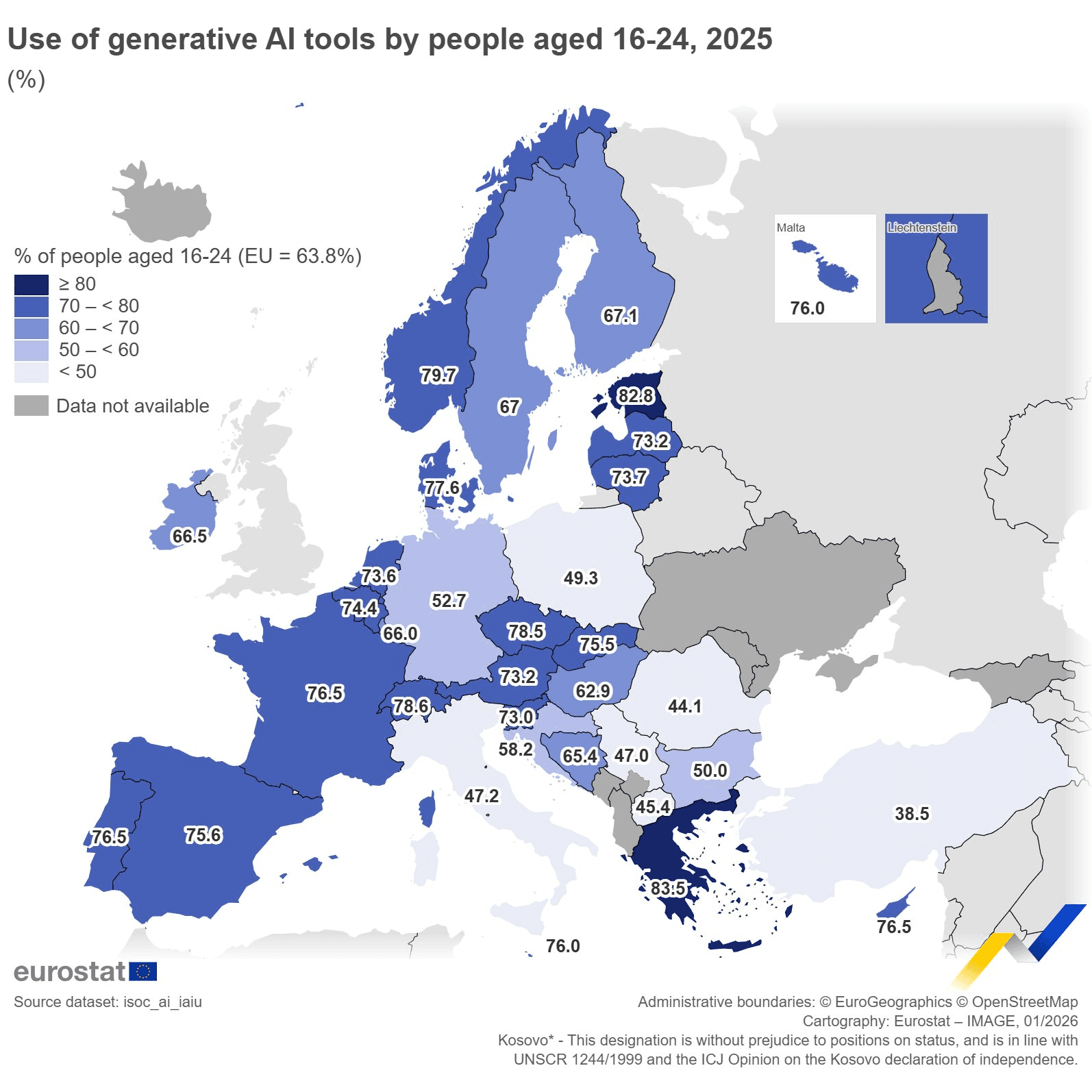
Over a third (34%) of businesses in Greece are now using AI in their businesses, while people in Greece, aged from 16 to 24, have the highest AI usage in whole Europe.
We can clearly see, as in example with Greece, that AI has become more than just a daily tool - it's a generational invention, helping businesses and people to do things easier, better. But we can't ignore the ugly side of this - the slow but clear erosion of authorship, of struggle, of intention. When everything becomes instant, the process starts to lose it's value. Not because the results are worse, but because we are less present in creating them.
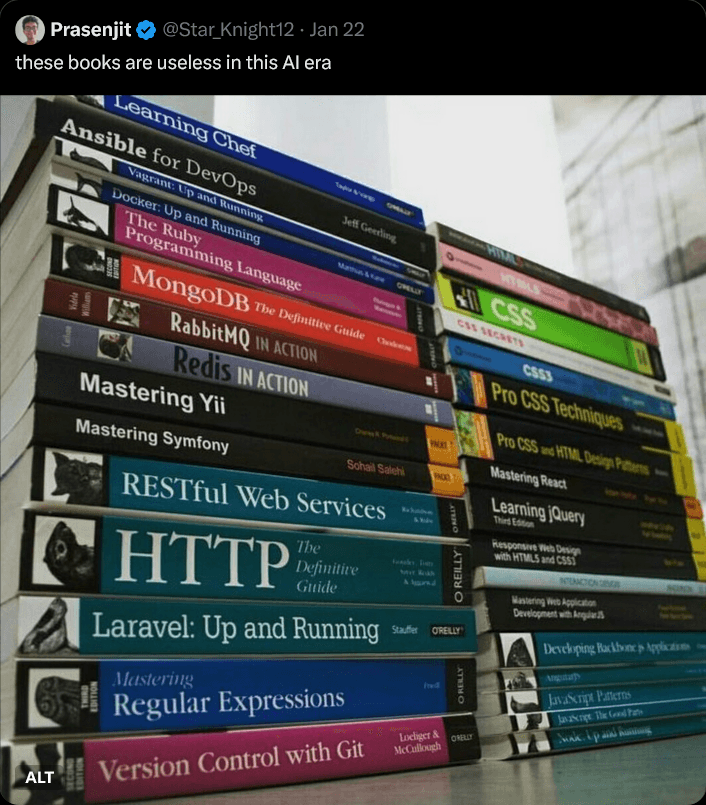
Creating was never supposed to be easy. The struggle, the dead ends, the frustration - that's the price of originality. That's also the part that makes it ours.
Maybe the real skill, in the age of AI, is not learning how to use it - but learning when not to. To still sit down, stare at a blank file, and build something that didn't exist yesterday. Even if it's slower. Even if it's harder. Even if no one asked us to.
The real tragedy is that, before replacing boring, routine tasks like cleaning or cooking, we try to replace the very things most people spend their lives trying to achieve. Automating the mundane could free people for greater things - but when we try to skip the hard road to expertise, we risk losing what actually makes people grow.
The challenges, failures, and small victories along the way aren't just obstacles - they're the very forces that shape skill, character, and creativity. Freeing people from routine tasks can unlock their potential, but freeing them from the struggle itself may leave that potential unrealized.
Still, this feels like an expected step in humanity's path, a painful but inevitable transition. We can't stop the tide, but we can choose how we move through it: with intent, with restraint, and by protecting the parts of creation that make us human. We must go through it as best as we can.